

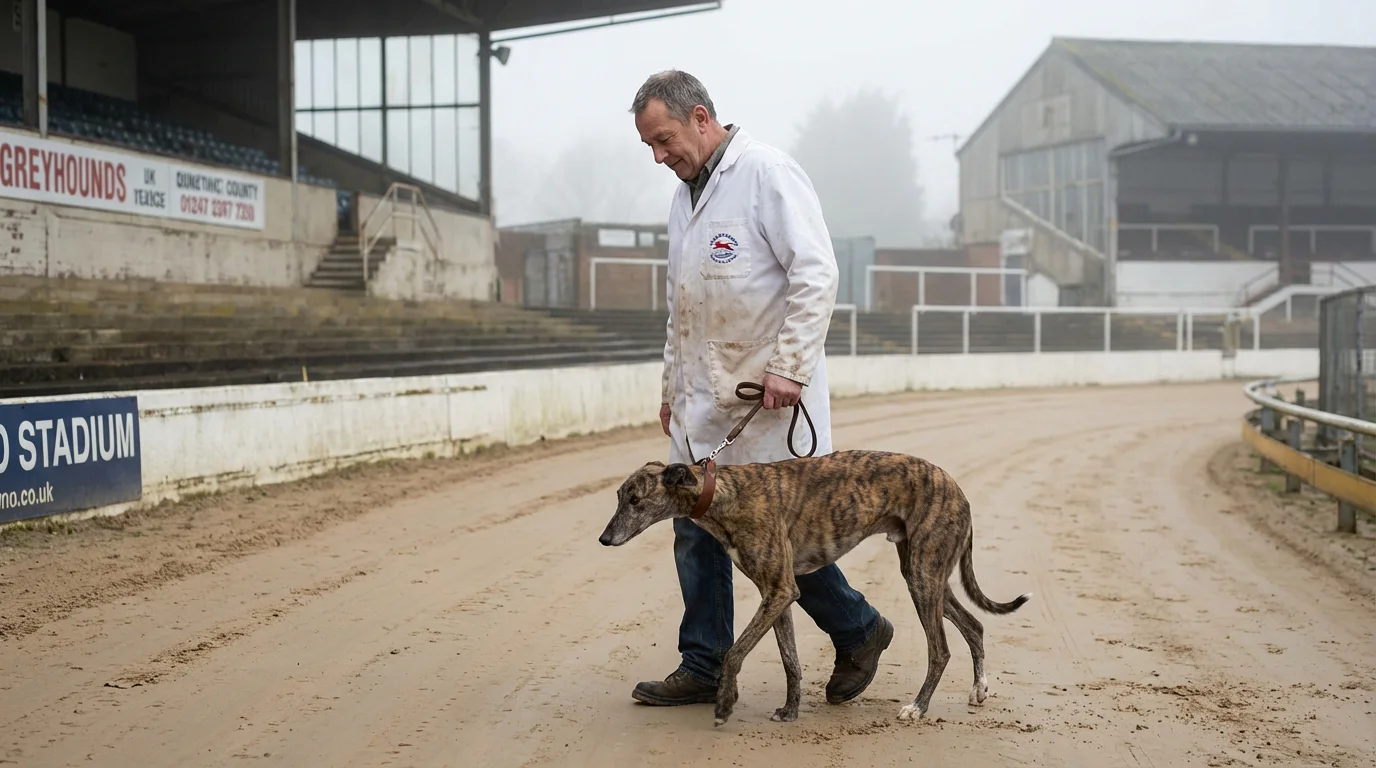
Trainer form is one of the most underused edges in greyhound betting. Most punters focus on the individual dog — its recent results, its sectional times, its trap draw — and overlook the person preparing it. But trainers influence outcomes in ways that do not always appear on the race card. The fitness of the dog, its weight, its preparation between races, and the timing of its entries are all trainer decisions. A dog in peak condition from a kennel firing on all cylinders is a fundamentally different proposition from the same dog underprepared by a trainer in a quiet spell.
In horse racing, trainer form is a mainstream data point. Punters check stable strike rates, seasonal patterns, and course-specialist records as a matter of routine. In greyhound racing, the equivalent analysis is less common — partly because the data is harder to access and partly because the trainer’s role receives less media coverage. That gap between the information available and the information most punters use is where value sits.
How Trainers Influence Results
A greyhound trainer’s primary responsibilities are fitness, conditioning, and race planning. Unlike horse racing, where the jockey’s in-race decisions can override the trainer’s preparation, greyhound racing has no jockey. Once the traps open, the dog runs on instinct, conditioning, and ability. Everything that determines how well the dog runs — its physical readiness, its sharpness from the traps, its recovery from previous races — is the trainer’s work.
Fitness management is the most direct influence. Trainers decide when a dog is fit to race, how often it races, and when it needs a rest. A dog brought to a race in peak condition will perform closer to its ability than one that is underdone (lacking race fitness after a break) or overdone (fatigued from racing too frequently). Recognising these patterns in a trainer’s schedule — how long they typically rest a dog between races, whether they trial before returning from a break — can flag runs where a dog is likely to outperform or underperform its recent form.
Weight management is another factor. Greyhounds are weighed before each race, and the weight is published on the race card. A dog that races at a consistent weight is in stable condition. A dog whose weight fluctuates — up two pounds one week, down three the next — may be dealing with fitness issues, dietary changes, or health concerns. Experienced trainers maintain consistent weights across campaigns. Erratic weight patterns can indicate a kennel under pressure or a dog that is not settling into its routine.
Entry strategy matters too. Trainers choose which races to enter their dogs in, including the grade, the distance, and the track. A shrewd trainer entering a dog in a lower grade after a string of competitive runs at a higher level is setting the dog up to win. A trainer entering a dog at a new track for the first time is introducing uncertainty. These decisions reveal the trainer’s intentions: are they targeting a specific race, building fitness, or simply keeping the dog active?
Kennel culture also plays a role that is harder to quantify. Some trainers develop a reputation for producing dogs that break fast from the traps — a product of training methods that emphasise early speed. Others are known for producing strong closers. Over a large sample, a trainer’s dogs tend to share running-style characteristics that reflect the kennel’s approach. Knowing that a particular trainer’s dogs typically show early pace, for example, helps when assessing whether a new arrival from that kennel is likely to be a front-runner.
Key Trainer Stats to Track
The most useful trainer metrics for greyhound betting are strike rate, place rate, profit-to-level-stakes, and recent form. Each tells a different part of the story.
Strike rate is the percentage of runners that win. A trainer with a 20% strike rate produces a winner roughly one in every five runners. In the context of greyhound racing, where the average trainer strike rate sits around 16–17% (reflecting the six-runner field and roughly equal distribution), a trainer consistently hitting 20% or higher is outperforming the average. Conversely, a trainer below 14% over a sustained period is underperforming, and their runners deserve scrutiny before you back them.
Place rate — the percentage finishing first or second — is a complementary metric. A trainer with a high place rate but a low strike rate is producing dogs that are competitive without quite winning. This is useful information for each-way and forecast betting: the trainer’s dogs are finishing close but not converting, which might indicate they are consistently placed at the right grade but lack the final turn of speed to win.
Profit-to-level-stakes reveals whether backing a trainer’s runners blindly at starting price would have been profitable over a given period. A positive figure indicates that the trainer produces winners at prices that compensate for the losers. A negative figure indicates the opposite. This metric accounts for odds, which strike rate alone does not. A trainer might have a 25% strike rate but produce mainly short-priced winners, resulting in a negative profit figure because the losers at higher frequency erode the modest winnings.
Recent form — the trainer’s results over the last fourteen or twenty-eight days — is the most immediately actionable metric. Trainers go through hot and cold spells, just as individual dogs do. A kennel that has produced five winners from twenty runners in the last fortnight is in form. A kennel that has gone twenty runners without a winner is either going through a quiet period or dealing with a systemic issue (kennel illness, training ground problems, or seasonal dip). Backing dogs from in-form kennels and opposing dogs from out-of-form kennels is a simple filter that adds measurable value to your selections.
Track Specialisms and Trainer–Track Combos
Most greyhound trainers are based near one or two tracks and run the majority of their dogs at those venues. This creates track specialisms — a deep familiarity with the track surface, the trap bias, the grading system, and the racing manager’s tendencies. A trainer who has been operating at Romford for fifteen years understands that track in a way that a visiting trainer from the North cannot replicate.
Track-specialist trainers consistently outperform their overall strike rate at their home track. If a trainer has a national strike rate of 18% but hits 24% at Crayford, that differential reflects genuine local advantage. The dogs are trained on gallops that mimic the track geometry. The trainer knows which traps suit which running styles at that specific venue. The racing manager knows the trainer’s dogs and may grade them in races where they are well suited.
For bettors, identifying strong trainer–track combinations is one of the most reliable filters in greyhound racing. When you see a trainer running a dog at their specialist track, with a recent strike rate that is above average at that venue, you have a structural edge that the market may not fully price in — especially on BAGS meetings where the market is thinner and less informed.
Conversely, be cautious when a trainer sends a dog to a track they rarely use. Away runners face unfamiliar surfaces, different bends, and traps they have not trialled from. The dog may have the raw ability to compete, but the lack of track experience introduces uncertainty that the form figures do not capture. If a trainer suddenly appears at a distant venue, ask why. It might be a targeted entry for a specific competition, or it might be a dog that has struggled at home and is being tried elsewhere — which is a less optimistic signal.
Where to Find Trainer Data
The Racing Post is the most comprehensive source of trainer statistics for UK greyhound racing. Trainer profiles include strike rates, recent form, profit-to-level-stakes, and track-by-track breakdowns. Timeform provides similar data with their own performance ratings layered in. Both platforms offer trainer leaderboards that rank kennels by recent performance, which is a quick way to identify hot and cold trainers without building your own database.
Some bookmaker apps display basic trainer information alongside the race card — typically the trainer name and the kennel’s recent winners. This is useful for quick reference but lacks the depth of dedicated form platforms. For serious trainer analysis, a Racing Post or Timeform subscription is the most efficient route. The data is updated daily, the filters allow you to isolate track-specific performance, and the historical records go back far enough to identify long-term patterns.
Follow the Kennel, Not the Crowd
The market prices individual dogs based on their recent form. It rarely prices in the condition of the kennel behind them. A dog returning from a rest with a trainer who has a 28% strike rate at the race track is a different proposition from the same dog returning under a trainer who has not produced a winner in three weeks — even if the form figures on the card look identical. Trainer form is the invisible layer beneath the race card, and the punters who track it have an edge that the majority of the market does not.
